
Children learn worship the way they learn language: by hearing it constantly, joining in badly, and slowly getting better. Almost every problem parents describe when teaching salah comes from expecting the finished behaviour before the practice stage has happened.
Start with presence, not instruction
Long before a child prays properly, they should see prayer happening. Pray where they can see you. Let them stand next to you, wander off, come back. A three-year-old copying two rakah badly is doing exactly the right thing for a three-year-old.
Say your duas out loud — before eating, leaving the house, sleeping. Children pick up these short duas from repetition alone, without a single lesson.
A realistic timeline
Between three and five, the goal is familiarity: knowing what prayer looks like, learning the shortest duas, hearing Bismillah and Alhamdulillah used naturally.
Between five and seven, teach the physical shape of salah one position at a time, and add short surahs. Fatiha comes first, then the short surahs, learned by listening rather than by reading.
From seven onwards, build consistency: one prayer a day observed properly, then two, then more. Consistency at one prayer beats an inconsistent attempt at five.
By ten, most children can hold the full pattern. If the earlier years were spent on familiarity rather than pressure, this stage is far easier than parents expect.
Keep sessions short
Five to ten minutes is plenty. A short, cheerful session repeated daily teaches more than a long one that ends in tears. Stop while the child still has attention left — that is what makes them willing tomorrow.
Attach learning to something that already happens every day. After breakfast, before bed, in the car. New habits stick to old ones far more reliably than to good intentions.
Make it visible
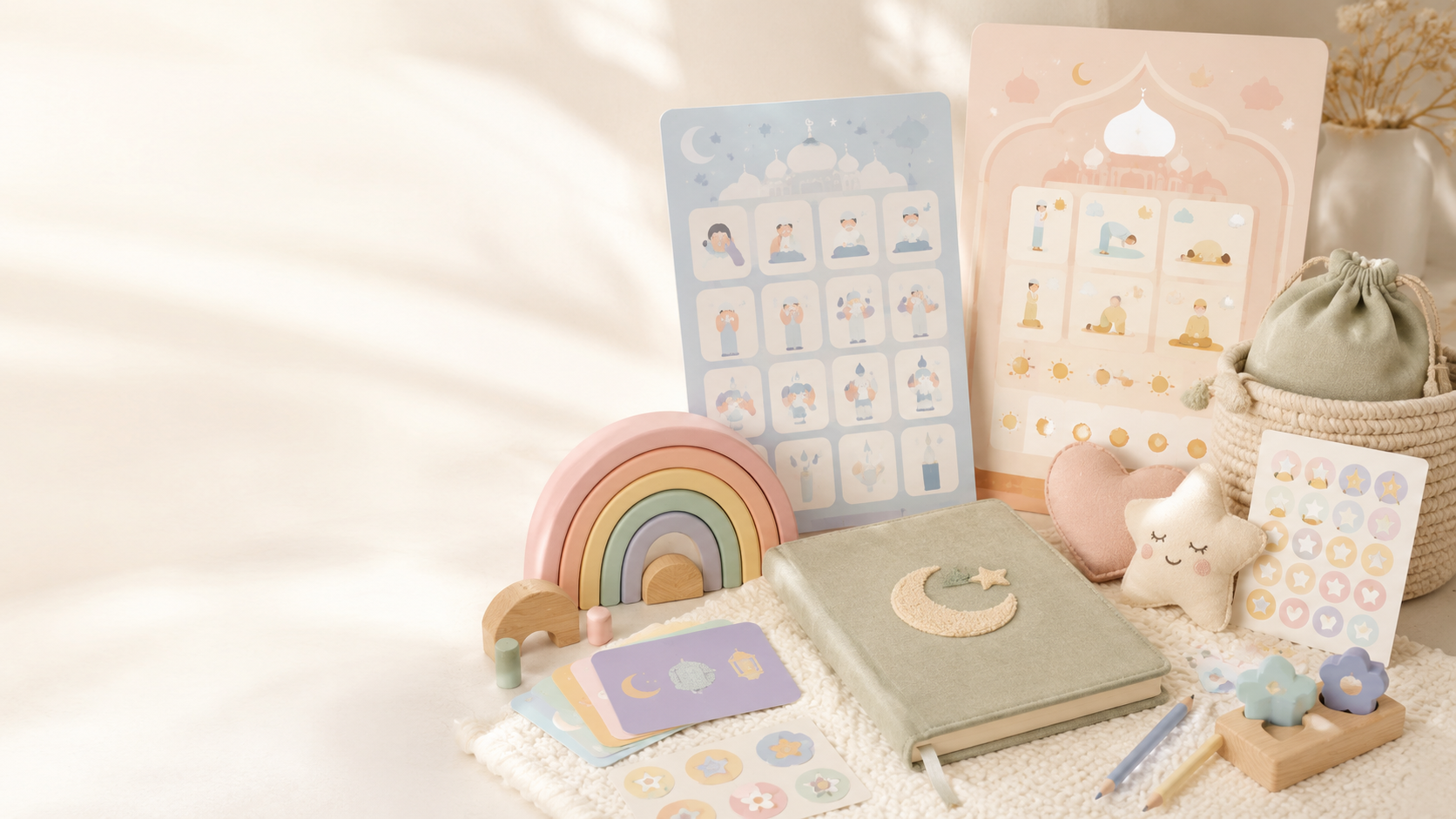
Children respond to progress they can see. A wall chart of the five prayers, a card set of duas they can flip through, a sticker for each surah learned. This is not bribery, it is feedback. The chart is a record of something real.
Illustrated dua cards work particularly well for the ages when reading is still slow, because the picture carries the meaning while the words are learned.
Teach meaning alongside words
A child who knows that Alhamdulillah means thanking Allah will use it in the right moment. A child who has only memorised the sound will use it where they were taught to. Explain in one short sentence — no more — what each dua is for. Meaning is what turns memorisation into habit.
Handle resistance without turning it into a fight
Resistance is normal and usually about timing rather than prayer. Interrupted play is the most common trigger. Give a warning: prayer in five minutes. Let them finish the level, the drawing, the game.
Never make salah a punishment or a threat. The association lasts far longer than the moment. If a child refuses, let it go and try the next prayer. You are building a relationship with worship that has to survive their whole life, not win an argument this afternoon.
Let older children lead
Around eight or nine, let a child give the adhan, lead their younger siblings, or teach a dua to someone smaller. Teaching consolidates learning better than any drill, and responsibility does more for motivation than praise.
What good progress looks like
Not perfection. A child who prays four out of five prayers most days, knows a handful of duas and uses them without being asked, and does not associate prayer with conflict, is doing well. Steady is the goal.
Our kids and learning range is built around exactly this: trackers, dua cards and keepsakes that make the routine visible and pleasant.