The best Islamic gift is the one the person reaches for on an ordinary Tuesday. Not the ornament that sits in a cupboard, but the tasbih that lives in a pocket, the dua card propped on a desk, the planner that gets filled in. If you remember one rule from this guide, make it that one: choose for the person's daily life, not for the occasion.
Start with the person, not the category
Before you browse anything, answer three questions. What does this person already do every day? What do they keep losing or replacing? What would they never buy for themselves? Someone who prays five times a day but keeps borrowing a prayer mat has told you what to buy. So has the student whose notes live on scattered paper, or the mother whose dua list is a note on her phone.
Gifts fail when they are chosen from a category rather than a life. A beautiful wall piece is a lovely object, but it asks the recipient to find a wall, a nail and an afternoon. A pocket tasbih asks nothing.
Match the gift to the occasion
Occasions carry expectations, and it helps to know them.
Eid gifts are usually small, joyful and given in numbers — several people on the same day. Keep each one modest, wrap them consistently, and lean towards things that can be used immediately.
Nikah and walima gifts are the opposite: one gift, more weight, often for a home rather than a person. Think in pairs and in sets, and think about what a new household lacks.
Aqiqah and new-baby gifts should survive being handled by tired parents. Keepsakes with a name and a date do well here because they outlive the newborn stage.
Graduations, hifz completions and Ramadan milestones deserve something that marks the achievement. A dated, personalised piece turns an ordinary object into a record.
Quality signals worth checking
Look at finishing, not photographs. On jewellery, check the clasp and the plating description — plating thickness matters far more than metal colour. On paper goods, check the paper weight and the binding; a planner that will be opened daily for a year needs to lie flat without cracking. On anything with Arabic script, check that the typesetting is proper Naskh with correct joining, not letters placed side by side.
Ask whether the piece can be repaired or replaced. Objects meant to last are usually made by people who will answer an email about them.
Personalisation: when it helps and when it hurts
A name, an initial or a date makes a gift specific to one person, which is exactly what you want for a keepsake. It also makes it unreturnable and unusable by anyone else, which is exactly what you do not want if you are unsure of spelling, preference or size.
Personalise when you are certain: their name as they write it, a date you can verify, a phrase they use. Do not personalise a gift you are giving on a guess. If you want an Arabic phrase, send the exact text you want set, and check it with someone who reads the language before ordering.
Making a modest budget feel generous
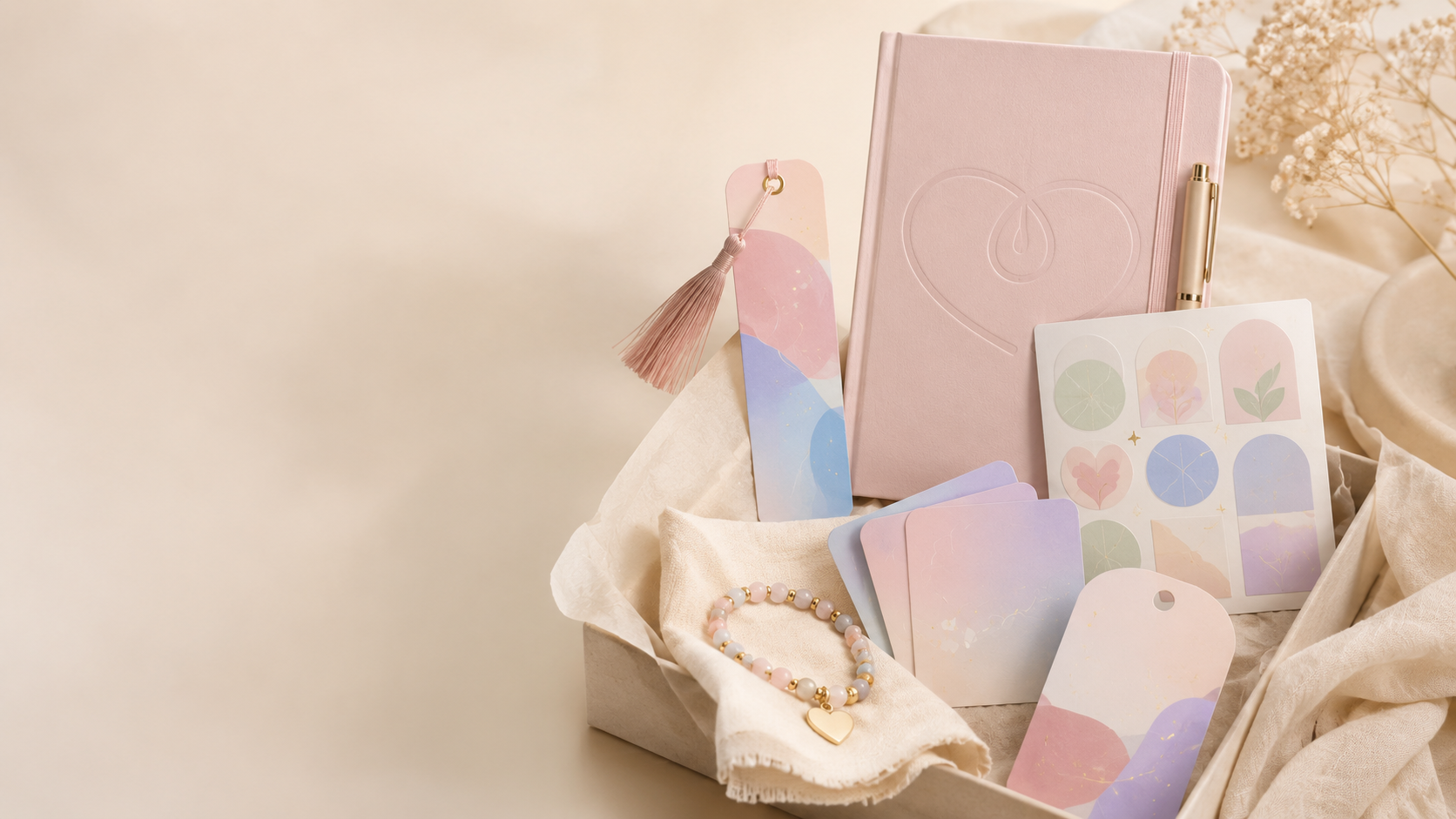
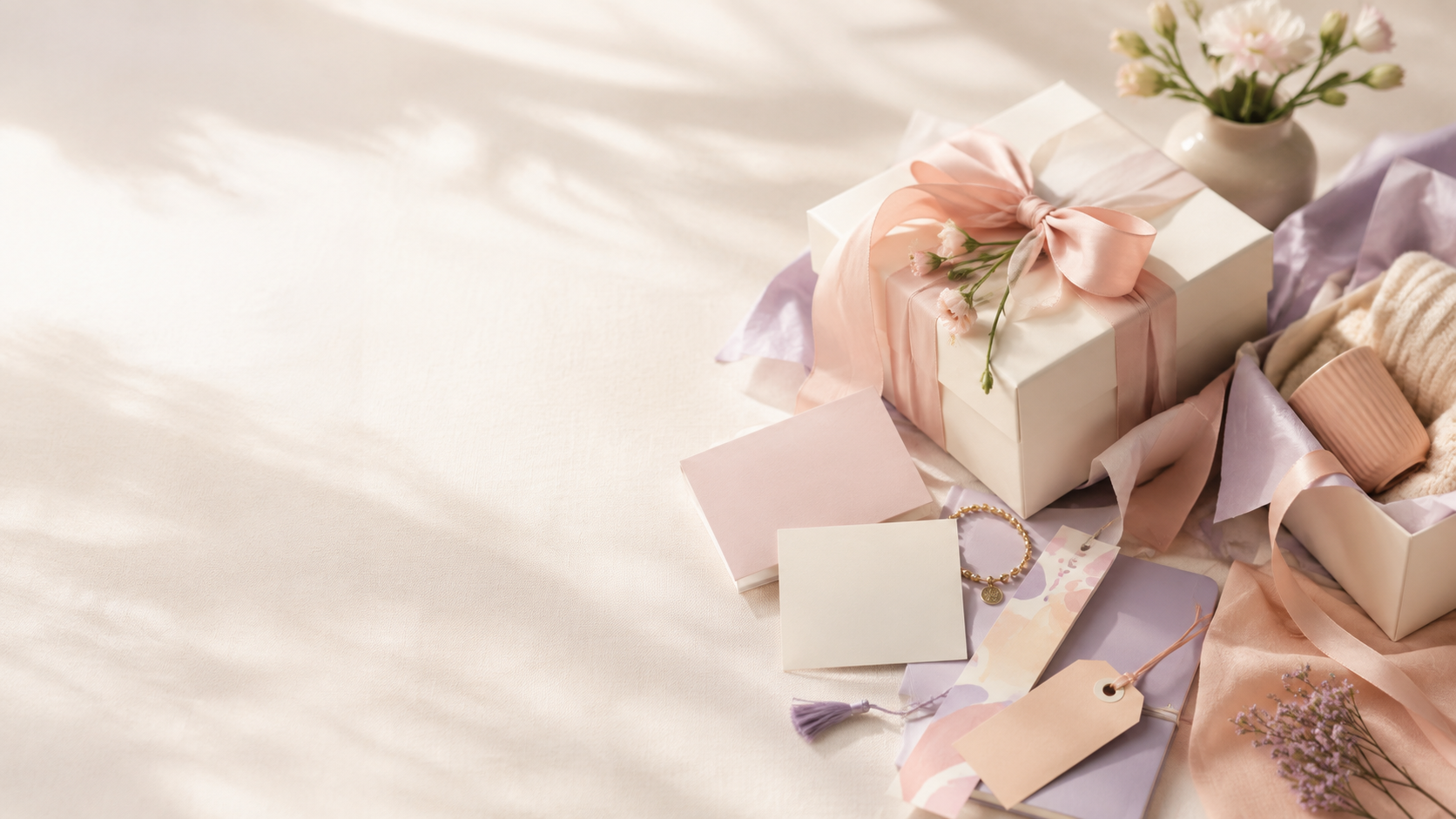
Presentation carries more weight than price. Three small pieces arranged in one box read as a considered set; the same three handed over in a shopping bag read as three small things. Wrap consistently, add a written note, and let the packaging do part of the work.
The other trick is coherence. A tasbih, a dua card and a small notebook are cheap separately and meaningful together, because they share a theme: something to hold, something to read, something to write. Coherence is free.
What to avoid
Avoid sizing risks unless you know the measurement. Avoid strong fragrances as gifts for people you do not know well. Avoid pieces where the Arabic is decorative rather than accurate — a misprinted ayah is worse than no ayah. And avoid gifting anything that quietly creates work for the recipient: assembly, framing, dry cleaning, batteries.
A simple shortlist that works for almost anyone
If you are short of time, a keepsake with a name, something for daily worship, and something to write in will cover most people and most occasions. Add a note explaining why you chose it. That sentence is usually the part they keep.
Browse the full range by purpose to see what suits the person you have in mind, or use our gift box builder to put a small set together yourself.