Jewellery is the gift people most want to give and most often get wrong, because it involves two things you usually cannot check in advance: size and taste. This guide is about reducing both risks.
The safest pieces to buy for someone else
Necklaces and pendants are forgiving, because chain length is adjustable within a range and there is no fit to get wrong. Bracelets with an extender chain are similarly safe. Earrings work if you know whether the person's ears are pierced and whether they have sensitivities.
Rings are the highest-risk gift. Finger size varies between hands, changes with weather and pregnancy, and asking outright ruins the surprise. If it must be a ring, borrow one they already wear and measure its inner diameter.
As a rule: if you have to guess a measurement, choose a different piece.
Chain lengths in plain terms
A short chain sits at the base of the neck and shows above most necklines. A mid-length chain sits at the collarbone and is the most versatile choice for daily wear. A longer chain falls below the collarbone and works well over layers and looser clothing, which is why it suits modest dressing especially well.
If you know nothing about the person's preference, mid-length is the least likely to be wrong.
Metals, plating and skin
Most affordable jewellery is a base metal with a plated finish. What matters is not the colour but the thickness of the plating and the base underneath. Thicker plating over a good base survives daily wear; thin plating over a cheap base changes colour in weeks.
If the recipient has sensitive skin or has reacted to jewellery before, choose stainless steel or a properly plated piece and avoid unspecified alloys. Ask what the base metal is. A seller who cannot tell you is telling you something.
Caring for plated pieces
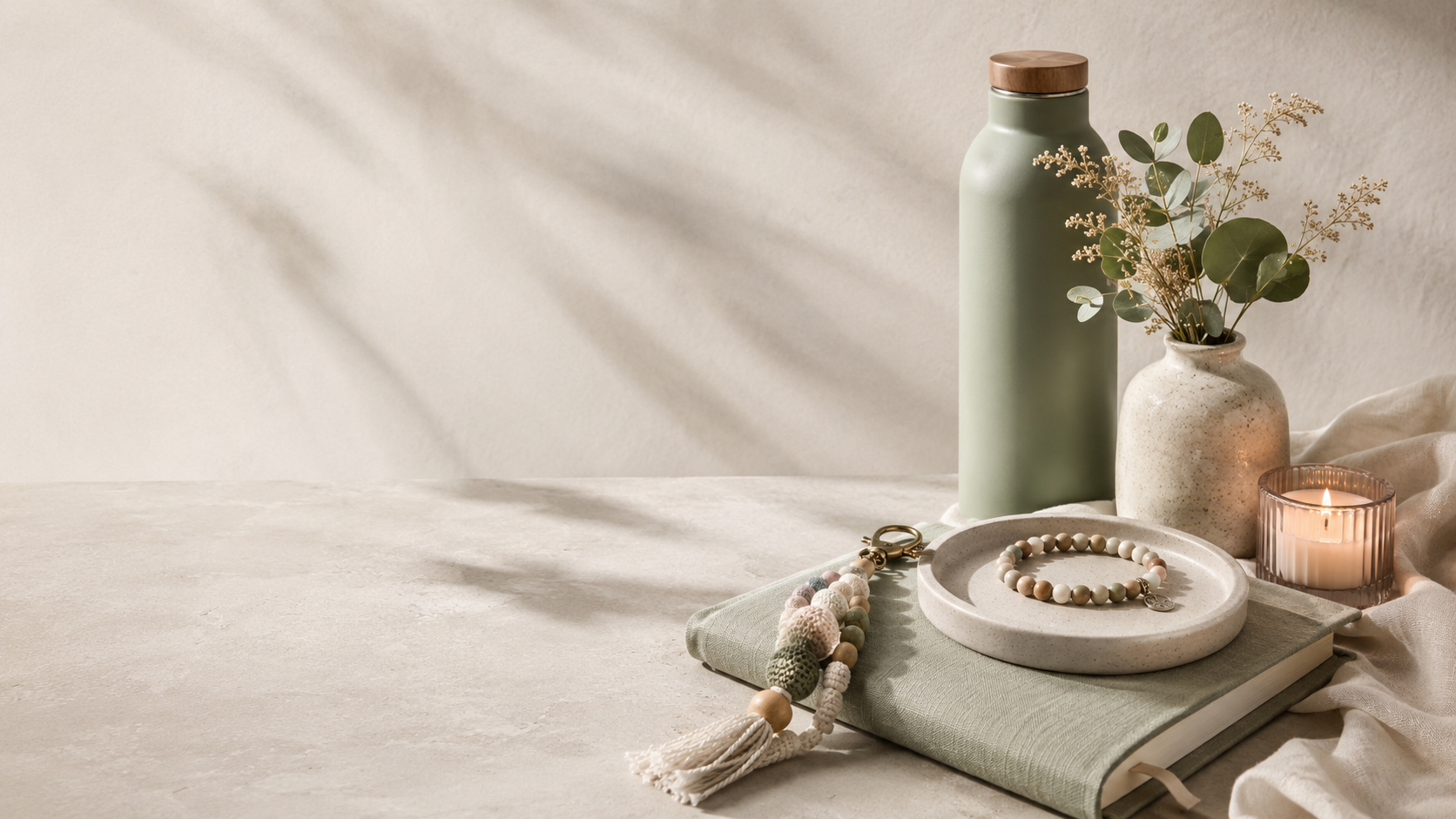
Plated jewellery lasts far longer with two habits: put it on last, after perfume, lotion and hair products; take it off before washing, swimming or sleeping. Store pieces separately so they do not scratch each other, and keep them dry. A pouch in a drawer beats a bowl on a bathroom shelf.
Say this to the recipient, or include a care note. Most plating failures are avoidable.
Engraving and Arabic script
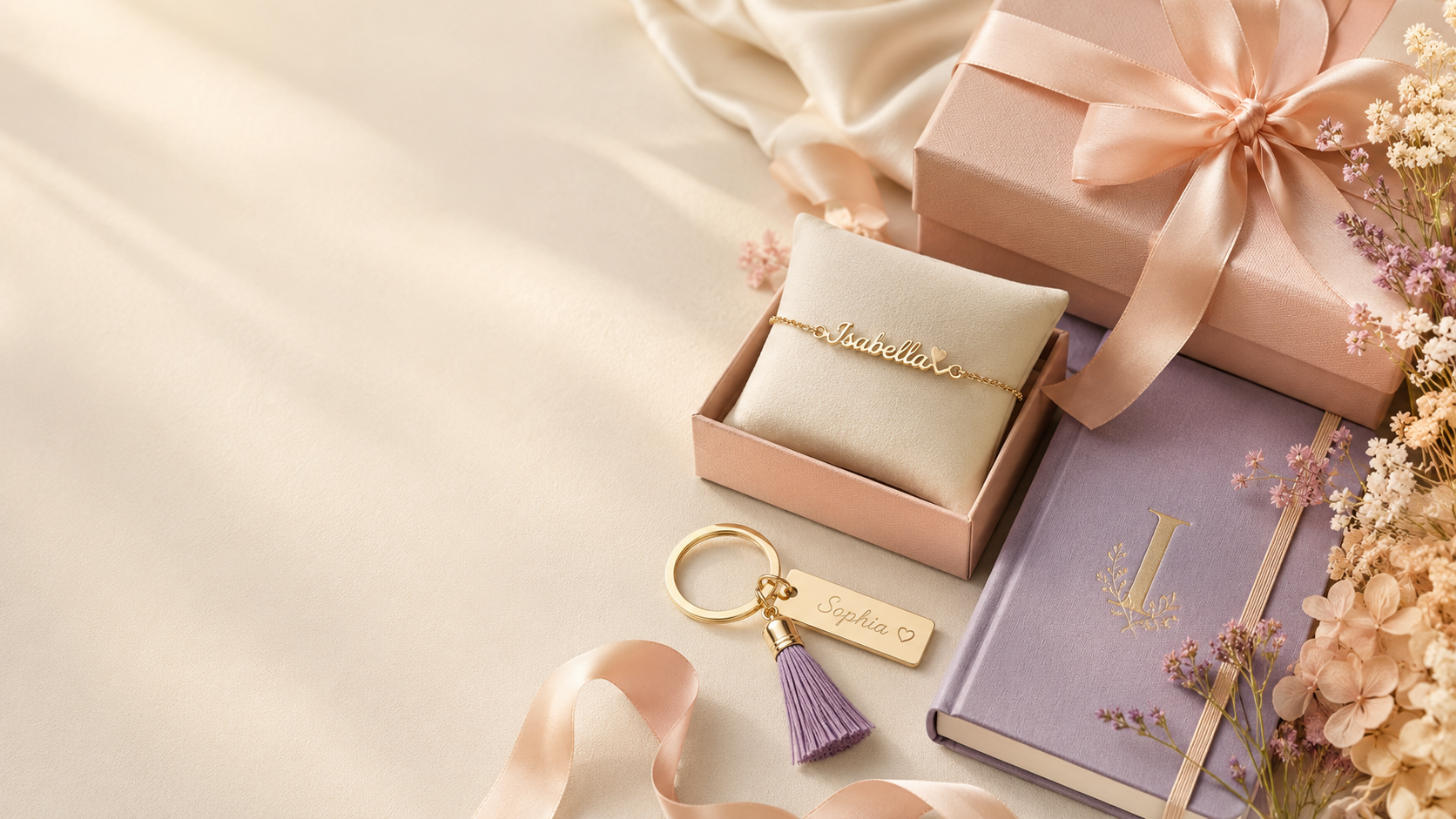
Engraving turns jewellery into a keepsake, but it also fixes it permanently to one person. Keep it short — a name, initials, a date, a single word. Long phrases shrink to the point of illegibility on a small surface.
For Arabic, send the exact text you want set, written the way you want it to appear, and have someone who reads Arabic confirm it before you order. Proper typesetting joins the letters correctly in a Naskh style; anything that looks like separated letters is wrong. Ask for a proof if the piece allows it.
Remember that engraved and personalised pieces cannot be returned, so certainty matters more here than anywhere else.
Matching the piece to how they dress
Look at what the person already wears. Someone whose everyday jewellery is a single thin chain will not suddenly start wearing a statement piece. Someone who layers will welcome a piece that adds to what they own rather than competing with it.
Buying for someone who dresses modestly usually means buying for pieces that sit above the neckline, work with long sleeves, and survive being put on and taken off several times a day around wudu. Practicality is not the opposite of beauty here; it is part of it.
Presentation matters more than you think
Jewellery is judged partly on how it arrives. A piece in a proper box with a pouch and a care card reads as considered. The same piece in a plastic sleeve does not. If the seller does not present it well, present it yourself.
A short checklist before you buy
Do you know the size, or is the piece adjustable? Do you know the base metal? Is the plating described honestly? Is the engraving text confirmed? Does it suit what they already wear? If all five are yes, you are very unlikely to get this wrong.
Browse the jewellery range, or read the size and care guide for the full material notes before you order.